Security
Burglaries happen in every area, and most of them happen in ordinary residential houses. The hardware on your windows and doors is the cheapest part of the whole picture and the part that decides whether someone gets in.
Hardware we supply and fit
None of this is expensive on its own. Fitted into sound frames by someone who works on the joinery itself, it's the most cost-effective security you can put on a house. Tap any image to see it larger.
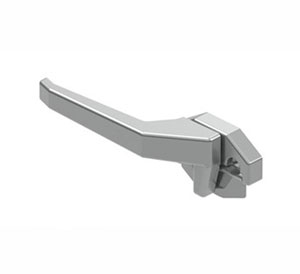
A secure, well fitting latched handle makes it harder to get into your home. They need to fit tightly and stay in place — a cheap and simple starting point.

Every access point into the house wants a door that locks — including the ones people tend to overlook, like the laundry and the garage internal door.

Basic sash locks can be bypassed easily enough. These ones can't, which matters on older villas where the sash windows are the weakest point in the house.

Lockable windows with keys discourage opportunists, who are looking for the quickest way in rather than a challenge.
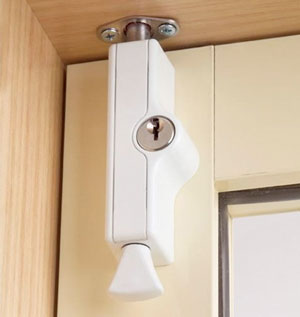
Security bolts add real strength to a door beyond the lock itself, which is worth having on any door that isn't overlooked from the street.
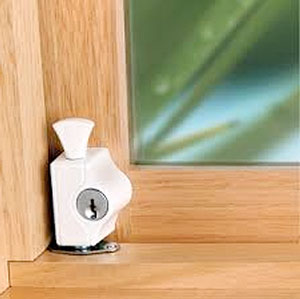
Simple to use and effective, and the right answer for timber joinery where a modern aluminium lock won't fit.
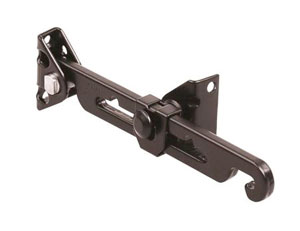
Restricted to a 100mm opening with two shorter settings as well, and releasable from inside when you want the window fully open.
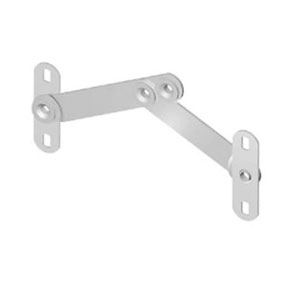
Restrictor stays limit the window to a 100mm opening, which covers both child safety and unwanted visitors in one piece of hardware.
Keyless entry
Digital door locks have gone from a novelty to something we fit regularly around Whangaparāoa and the Hibiscus Coast. The appeal is obvious — no keys under the mat, a code you can give a tradesman on Tuesday and cancel on Wednesday, and no locksmith call-out when a set goes missing. What matters far more than the brand on the front is the door it goes into. A digital lock is a heavier, deeper piece of hardware than the latch it replaces, and it wants a sound, correctly bored door and a jamb that holds a strike plate properly.

Most people come to us for one specific reason rather than the technology itself.
Where houses are weak
Front doors get all the attention. These are the ones that get overlooked on a walk around the house.
Advice first
Plenty of homes need three or four pieces of hardware rather than a wholesale upgrade. We'd rather point out the two windows that matter than sell you a set of stays for the whole house.
A break-in nearby, a rental to secure, small children upstairs, or a door that's never felt solid.
We look at where the house is genuinely vulnerable and what hardware suits the joinery you've got.
Hardware is only as strong as what it's screwed into, so any underlying joinery problems get put right at the same time.
No obligation, and no pressure to buy hardware the house doesn't need.
Get in touch todayFAQs
Both cap the opening at 100mm. A restrictor stay is the simpler fixed version, mainly about child safety and keeping the gap too small to climb through. A security stay is adjustable — three opening settings — and releasable from inside when you want the window fully open.
Not any door. It needs a solid door of the right thickness, the correct backset, and a jamb sound enough to hold the strike. Hollow-core doors and split or rotten jambs won't carry one. We check that before ordering anything, and if the door needs repairing first we'll say so.
The ones we fit have a physical key override, so you're never locked out. They also warn you well before the batteries go flat. Keep the override key somewhere sensible — not under the mat.
Not against someone prising at the sash. The handle mechanism isn't built for it. Separate security locks hold the window far more firmly, and having both is what makes the difference.
Yes. There are locks made specifically for wooden windows, and sash locks that can't be slipped the way the basic ones can. Timber joinery is exactly the kind of work we already do, so the fixings go into sound wood.
Only if the frame is sound. Fitting good hardware into a split or rotten jamb gives you the appearance of security without the substance. We'd repair the jamb first — which is standard work for us, not a separate job.